

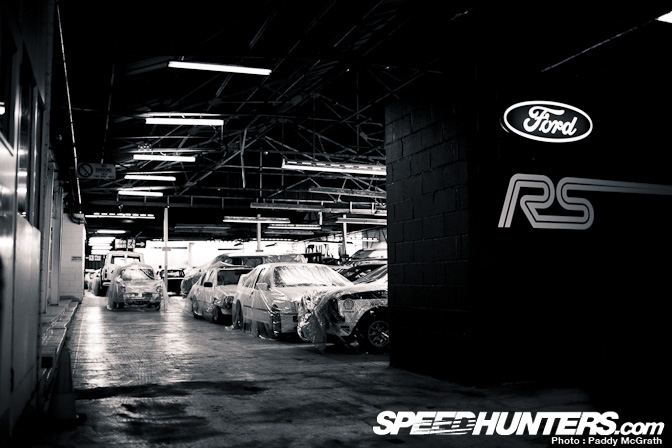
Back in September, I was lurking around the north of London for a few days after the always impressive Goodwood Revival. I love travelling to the UK as I never know what stories I'll come back to Ireland with. It is a proper motorsport country which some of my UK friends seem to forget sometimes but no matter where you travel to on her majesty's island, you're never too far from something of interest. As I worked away on stories from Goodwood, Hellaflush UK and Players Show, I got one of those e-mails that you never, ever expect to get.
It was from my good friend and Speedhunter regular Bryn Musselwhite. He had been working on a commissioned shoot earlier that day at the Ford Heritage Centre and remembered I wasn't too far away. He also knows of my love of all things blue oval so went out of his way to make the right connections and introductions for me to visit the secretive workshop. All I needed to do was send one e-mail. I didn't have to be asked twice.
To be honest, I thought this was something that would fall through purely because if it came about, my mind would be blown. My time in the UK was rapidly running out as I had to return to Ireland in the next day or so. A reply was received almost instantly – 'When can you come?' it asked. 'Tomorrow?' was the suggestion. 'See you then, here are the directions.'
Out of nowhere, this was happening.
Let me explain a little about the Ford Heritage Collection. Located in the very heart of the Ford Dagenham plant in the UK, the FHC is actually a fully operational workshop which maintains one of the most expensive and exclusive press fleets on the planet. It is not open to the public, it is not advertised anywhere and it is not easy to find. But what lies inside this building is nothing short of one of the greatest collections of cars I've personally ever come across.
Setting out early on a beautiful Friday morning in north London, I made my way to Dagenham. I was told that my GPS would only get me so far and once I reached the plant, I'd have to find my way on my own. Turning off the main road into the main entrance of the plant, I'm immediately taken back by the scale of the place. I'm also hit by the realisation that I'm on coveted ground. Passing through the first security checkpoint, I quickly identify the landmarks I need to find my way and head in the right direction, all the while marvelling at my surroundings.
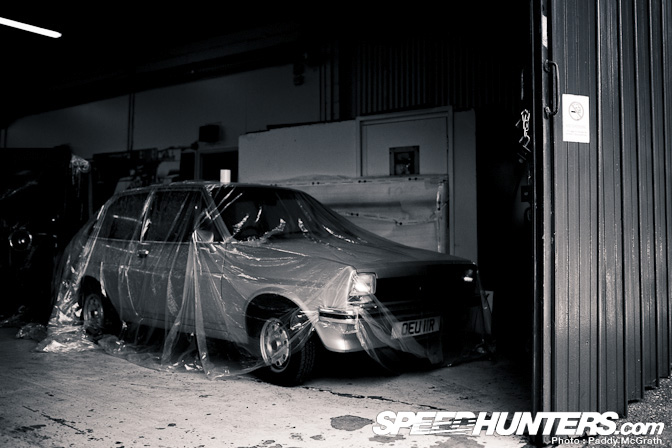
Passing what looks like an out of use warehouse, I catch a glimpse of a covered over Fiesta MKI. Reversing back the road, I take my camera from the boot of my car and make my way towards the slightly opened door.
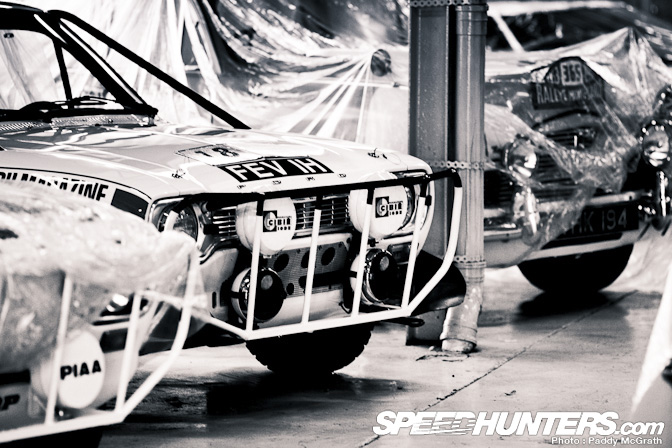
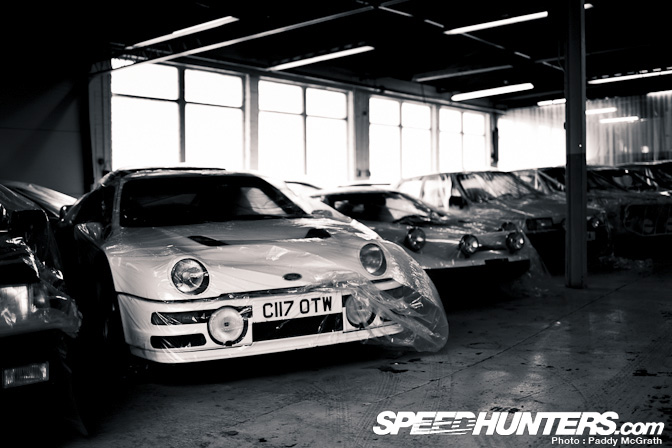
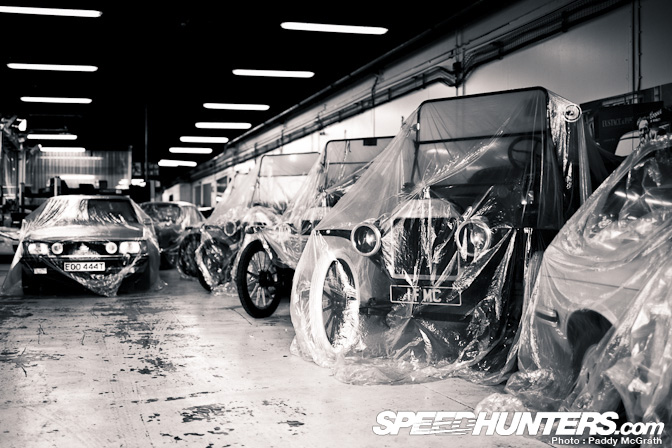
Looking inside, I know I'm in the right place. With nobody in sight, I slowly and cautiously make my way inside the high ceiling space. There are cars parked in all corners of the building, each with their own lightweight plastic cover which are being gently moved by the slight breeze that makes its way through the building. There is no noise to be heard and for a few moments, I'm left in absolute and total awe by my surroundings.
A man appears from behind a car and politely introduces himself before we are joined by another man who introduces himself as John. That would be Mr. John Nevill, the man who I was communicating with about the visit and who looks after the business end of the Heritage fleet.
John quickly begins to talk to me about the who / what / why / where and when of the setup and is quick to point out that this is not a museum, it's a fully functional work shop and each car is taxed and road worthy. Seemingly to prove a point, he whips the cover off a (circa 1912 if my memory serves me correctly) Model T and before I know it, I'm being brought around the Dagenham plant in a car that is nearly 100 years old. Returning the Model T back to its original spot, the covers come off one of the rally prepared MKI Escort RS1600s.
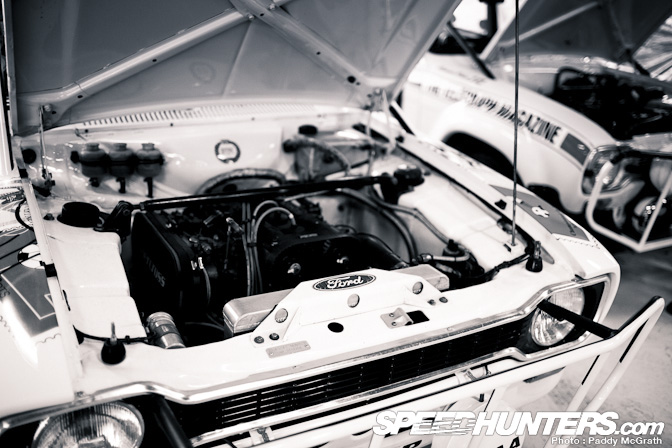
The car starts first turn and the facility is immediately filled with the sound of a rather angry BDA engine on idle. The car was built as a tribute to Hannu Mikkola's 1970 World Cup Rally winning RS1600 Escort – which incidentally is parked beside us – and was used by Mikkola to celebrate the anniversary of their 1960 win by competing in the 1995 London to Mexico rally. Mikkola also won that event. And yet again before I know it, I'm being treated to a blast around the plant with the sound of a BDA echoing off the surroundings.
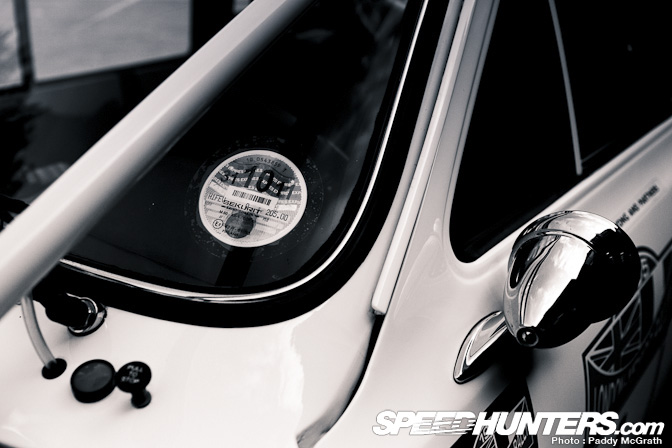
When we return, John points out that the road tax expires next month (these photographs were shot in September) and that I'll find each car on the premises can be driven out the door at a moment's notice.
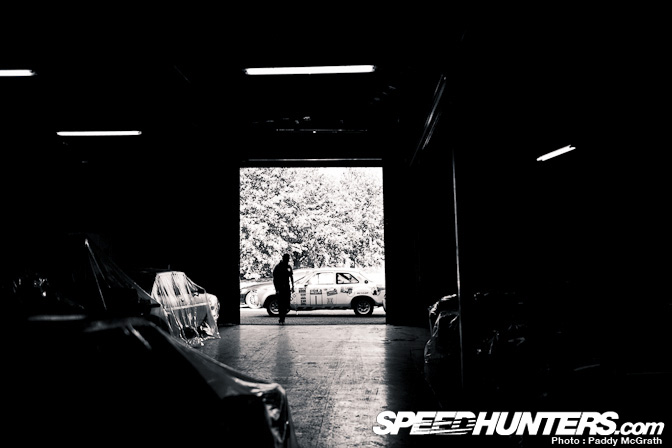
This is the main purpose of this operation. They have pristine examples of every Ford of note from the early 1900s here that can be used by journalists or by PR for comparative purposes.
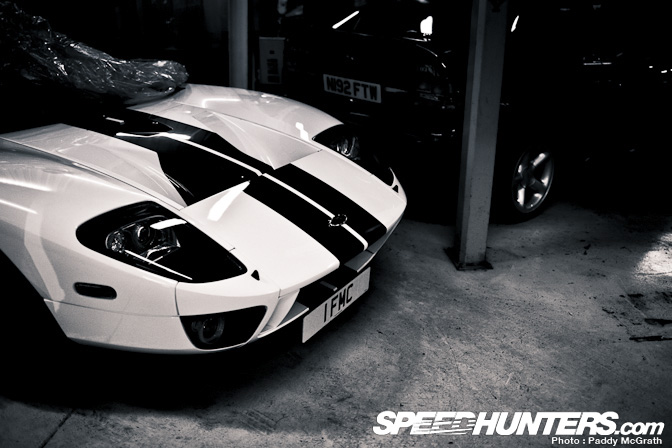
John explains to me that as all of the cars are driven regularly, none of them are kept to concours standard.
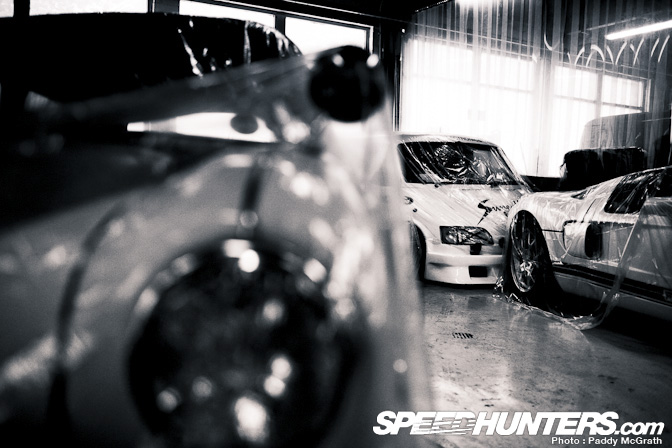
He could have fooled me to be honest, as every car I lifted the cover on was in immaculate condition.
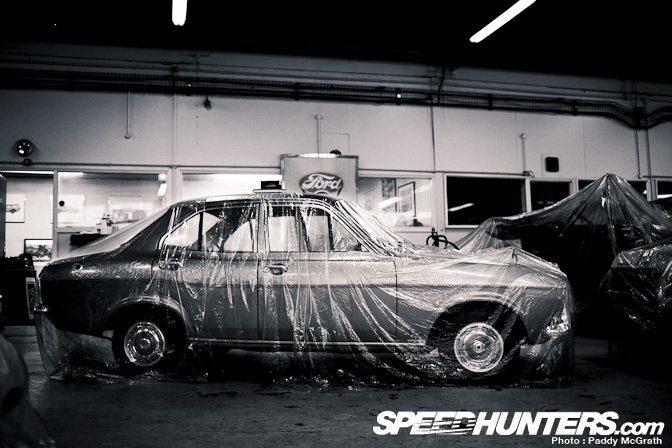
These cars were built to be driven and it's something that Ford intend on them continuing to do so for as long as there is fuel available for them.
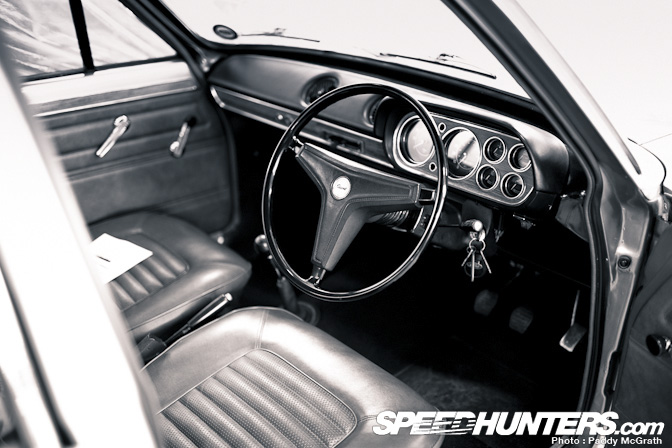
Walking around the facility, I'm left speechless at some of the cars I find.
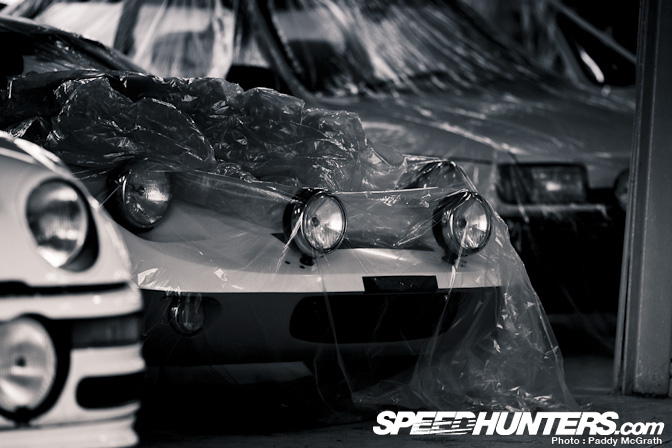
Take this Ford GT70 as an example. The brain child of Stuart Turner and Roger Clark, the car was intended for the world rally stages as the successor to the MKI Escort. Designed by Len Bailey, the mid-mounted GT70 was tested with an RS2600 V6 and a 1600 BDA engine and was planned to be used as a rival to the Porsche 911s and Renault Alpines of the era.
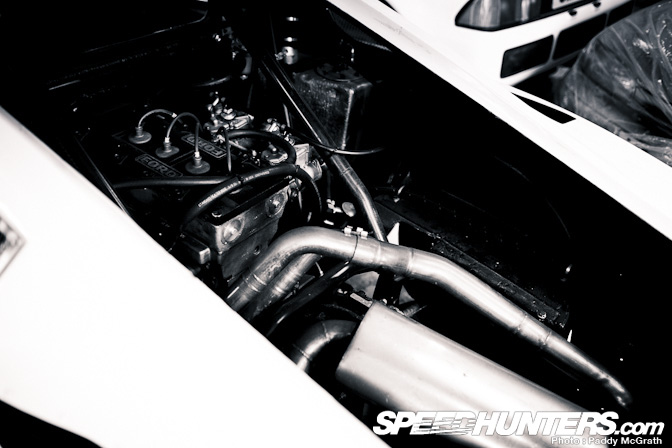
Only six were ever built. It's believed that only two survive to this day. This is a piece of history that previously only existed in pictures to me. As if it wasn't enough to share company with the GT70, John showed me a notebook with the designer's original notes and intentions for the car. You could never put a price on this car.
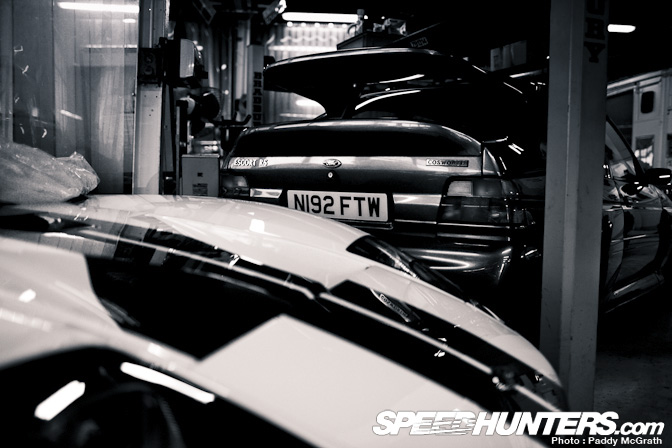
The staff at the FHC go out of their way to ensure that the cars remain as close to the original specification as possible.
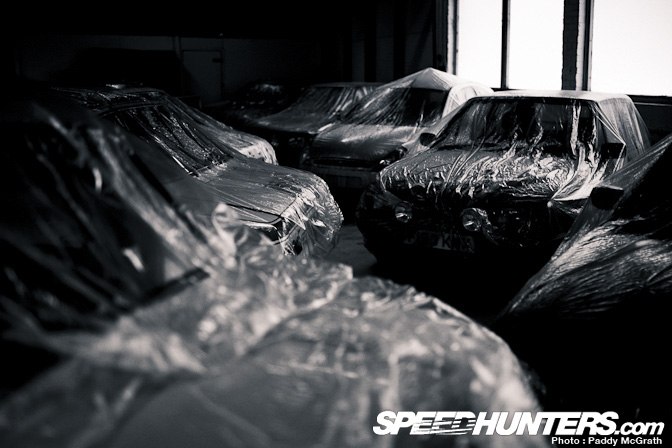
Accidentally, the design of the building turned out to be the perfect place to store the cars. As the roof doesn't connect to the top of the walls, the building breathes, allowing air to flow in and around the cars which prevents any dampness which may lead to corrosion setting in.
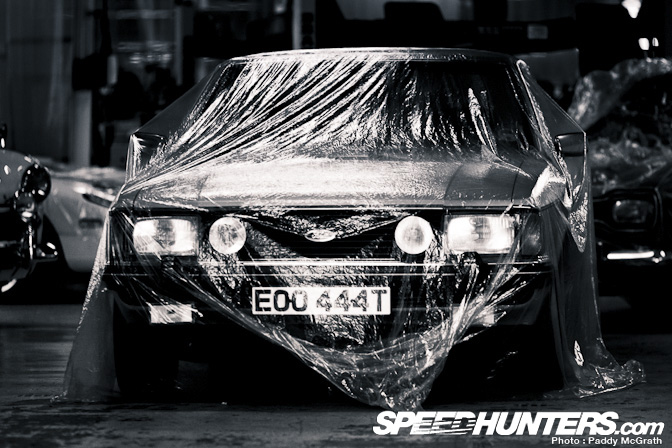
As the building is located between an overflow yard and a train line, it does get very dusty inside so the simple plastic covers are required just to keep the dust from settling on the cars.
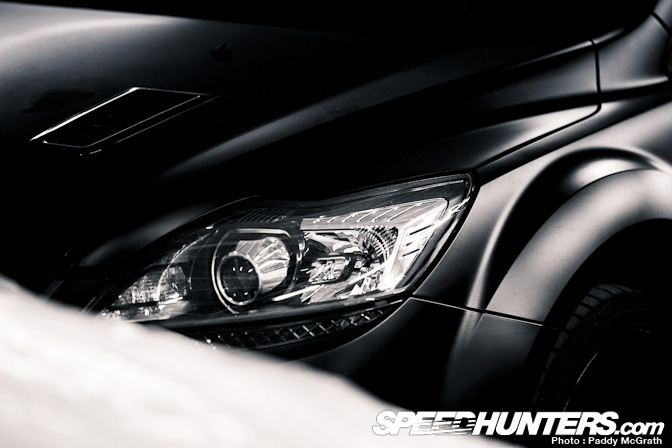
For the second piece of the story, we'll take a look at some of the cars which lurk in the shadows here along with a little bit of history of Ford Europe.
-
Paddy McGrath
OFFICIAL SPEEDHUNTERS SUPPLIERS





desktops of EVERYTHING
This is amazing. I myself love the blue oval and this would be me dream seeing as im a 15 year old photographer. I would have liked some coloured pictures, perhaps of some of the livery of the cars.
Fantastic collection. Great feature.
I know this site is about photos, but can you all imagine sound bites from all the different cars. Man, what an incredible story. I am now speechless.
i love fords,thats all
Where the hell is a picture of the GT70??? you talk wonders but there is no pic of the car!!
Totally awesome, any RS500's in the collection?
I ejaculated.
Wow... I am speechless. Both in the machines, and the photographs of them.
Amazing collection. Do these guys just buy the cars? Do they work for FORD directly??
I'd prefer to see that in COLOR !
Cosworth Escort !
Yess.
Oh
My
GOD.
O_O
This is just... immense. Hallowed ground, to be sure. I cannot thank you enough for sharing this with us... oh, to be an employee there...
Who drained all the colour??
Please make a colour shoot available as well indeed, the black 'n white isn't doing the cars any justice.
Brilliant Paddy,keep up the good work pal
anything that has Cosworth or RS in it is gonna be mine
i dont see any capri
I feel like Jr's car needs to make its way here at some point
Thank you all for the kind words.
@Wally
The GT70 is pictured with the captions.
I'll have part two together early in the coming week, which will also be a complete black and white set.
I'm a fan of hondas and american muscle but this is still a awesome post. My uncle lives not far from here to they have tours you can book?
Bow down to the blue oval
Awesome!
Desktops!
Love the B/W theme....
but any hopes of finding the color photographs elsewhere? blog, website etc?
Because looking at the original colors would fit in perfectly with the theme, which is about the pristine preservation of these cars. Its the difference between looking at black and white WW1 photos vs colored ones.......
Color? Otherwise, great writeup! It's great knowing that at lest one of the Supervans still exists.
Wow, you think places like this don't exist... this is just amazing, i want to work there NOW
just 1 word....owsomeeee
I will not rest until I see desktops from this.
Escort Rs Cosworth. FTW
oh my god. this has made my day end of.
I think its outrageous that the paying public cannot ever find or see these vehicles.... Blue Ovals are life and what make it worth living.
Matthew Lewendon Why is it outrageous ?? They were built by Ford, they are owned by Ford and therefore Ford can do with them what they will/like.
I agree that it is a pity that they are not displayed to the general public, but there we go.
Are you saying that it is outrageous that members of the public who have their own car collections must put them on public display ?? Would you if you were in that position ??
"If" they were shown to the public, then they would suffer all manner of damage/wear just as other museums find that their cars do when they are left near the public !!
GuestCarLover Matthew Lewendon I think he meant outrageous in a somewhat different way...
Please please can someone tell me how I can book this as a very special present for someone who has really been through it with an op for a brain tumour