
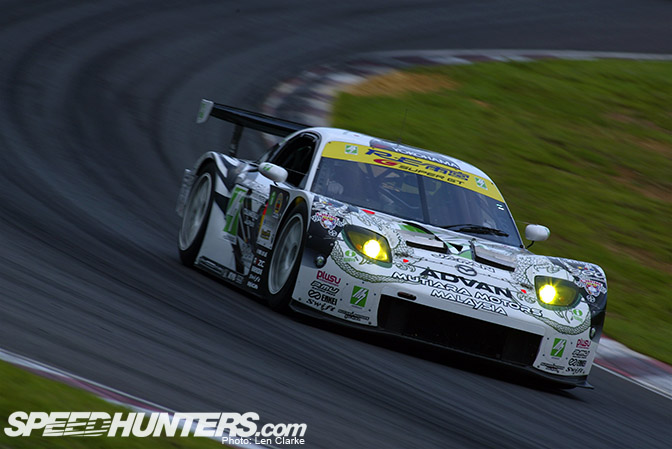
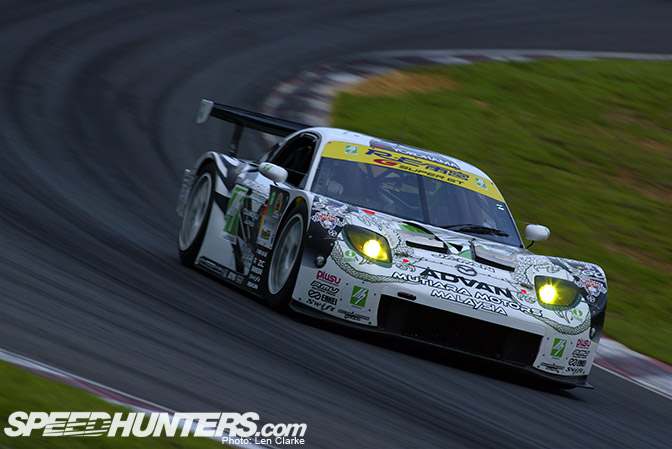
It seems a little hard to believe that an institution in Japanese endurance racing has finally come to an end. The eponymous RX-7 as campaigned by Isami Amemiya's RE: Amemiya Racing outfit recently ran its swansong event, the JAF Grand Prix Fuji Sprint Cup. The team will be back in 2011, though with a different (as yet unannounced) machine – expected to be an RX-8.
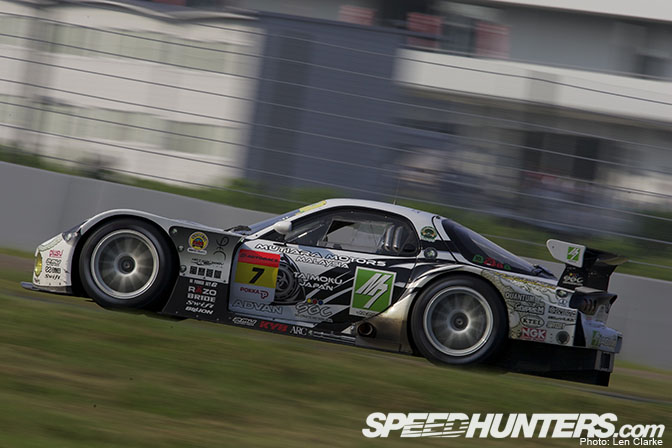
The RE: Amemiya-developed Mazda RX-7 first appeared in the JGTC (All-Japan Grand Touring car Championship) in 1995 and quickly became a fan-favourite.
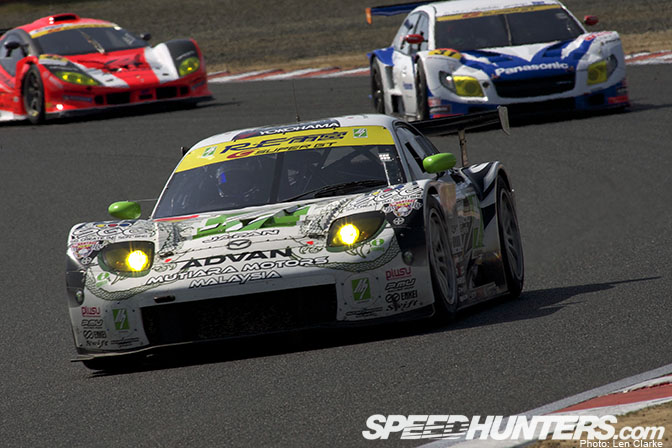
Amemiya-san's never-say-die attitude, immense skill with Wankel engines (the man himself still works on each and every race engine) and relentless hard work has paid off massively, his team becoming known as giant-killers in SUPER GT's highly-competitive GT300 class.
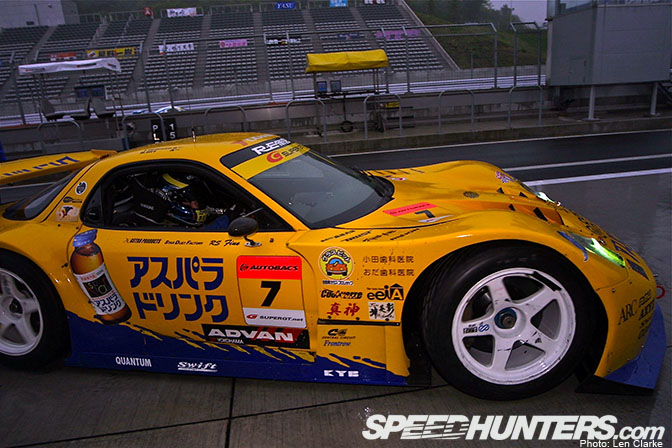
Over the seasons the RX-7 went through a number of different liveries and driver lineups, though one constant was the steadily-improving race and championship table' results. The picture above is from the 2006 season when then-drivers Tetsuya Yamano and Hiroyuki Iiri won the GT300 title after taking 2nd at the Suzuka season-opener before winning at Sepang and then coming 2nd once again in Round 8 at Autopolis.
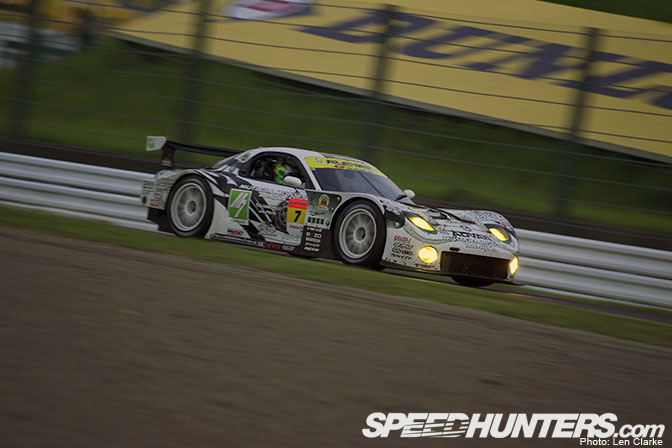
Three years into the rotary engine-powered RX-7's long SUPER GT career, 1997 saw drivers Shinichi Yamaji and Haruhiko Matsumoto take 7th in the hotly-contested class, before the same pairing earned their first race podium the following season.
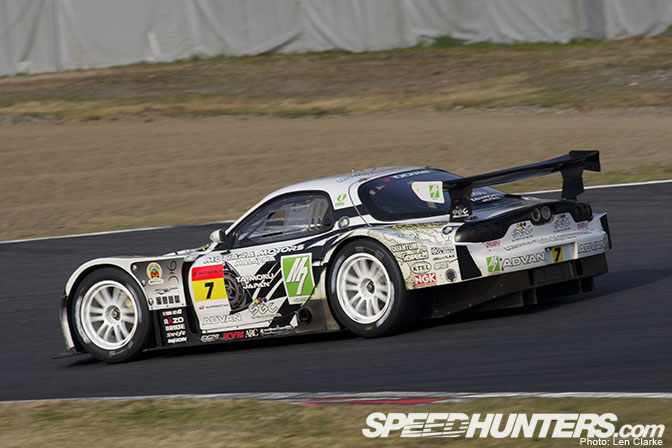
In 1999, 13-time All-Japan Gymkhana Champion Tetsuya Yamano was drafted into the team, he and Matsumoto scoring a pair of 2nd-place finishes on the way to 5th in the title hunt, the team's best result to that point.
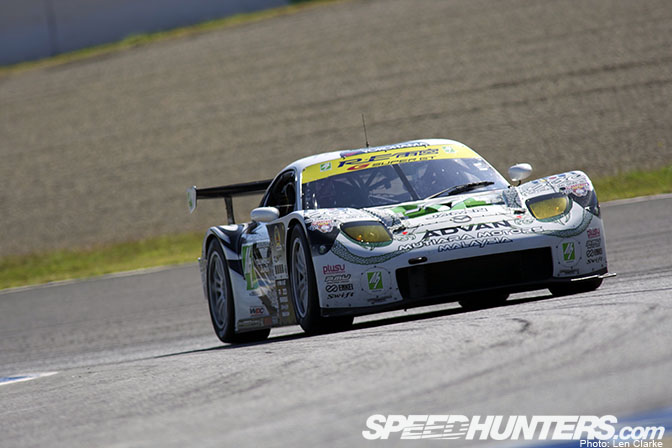
Yamano continued for two more seasons, netting another 5th in the championship in 2000 (with three podiums, including one 2nd place) before a huge breakthrough the following year when, in their third season together, the Yamano/Matsumoto duo took the team's first victory in Round 3 at Sportsland SUGO.
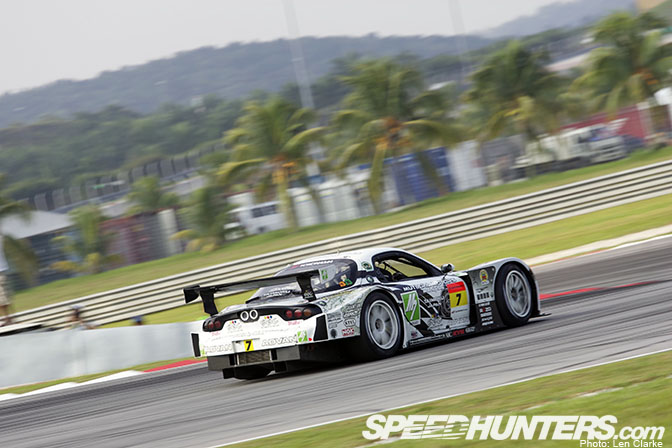
The 2002 season saw Nobuteru Taniguchi replace Yamano, appearing in Rounds 1, 4 and 7 – including victory at Sepang where he shared the car with long-time driver Hiroyuki Matsumoto.
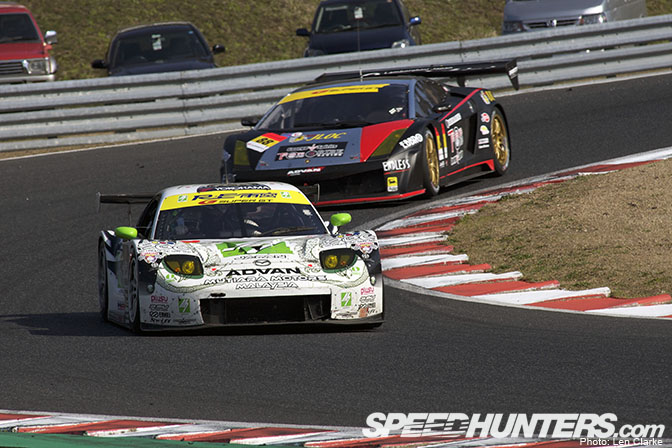
2004 saw one of the team's original drivers Shinichi Yamaji back in the car, teamed up with Hiroyuki Iiri. The pairing had a hugely successful season together, winning both Rounds 3 (Sepang) and 6 (Autopolis) – two of the most challenging tracks on the SUPER GT calendar.
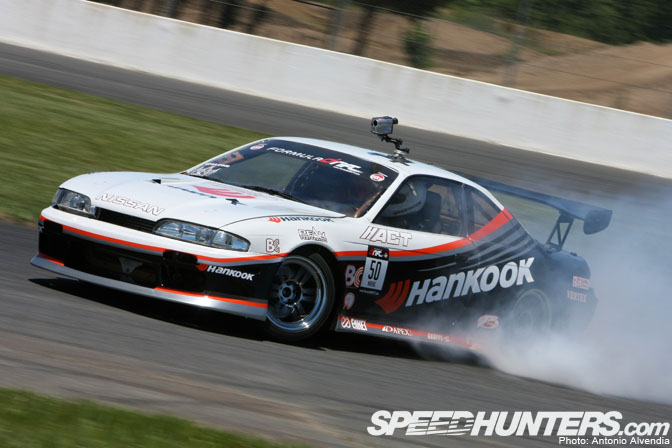
The Yamaji/Iiri pairing contunied in 2005, though the team's best result was in the season-opener at Okayama where they scored 2nd.
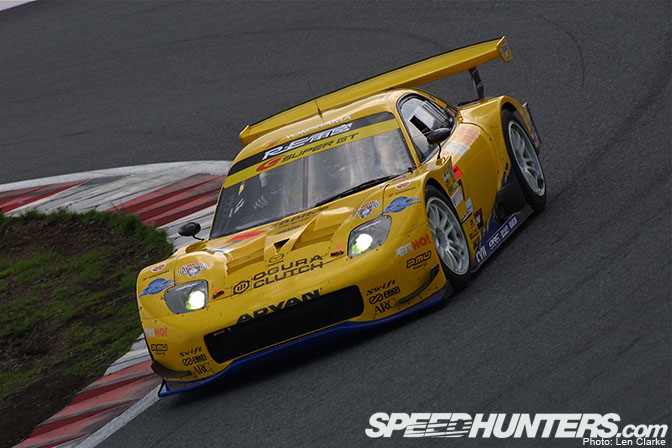
After taking the title in 2006 with returnee driver Tetsuya Yamano, 2007 saw Iiri joined by Ryo Orime. It was a less than successful season when the car ended the year 20th in the title fight.
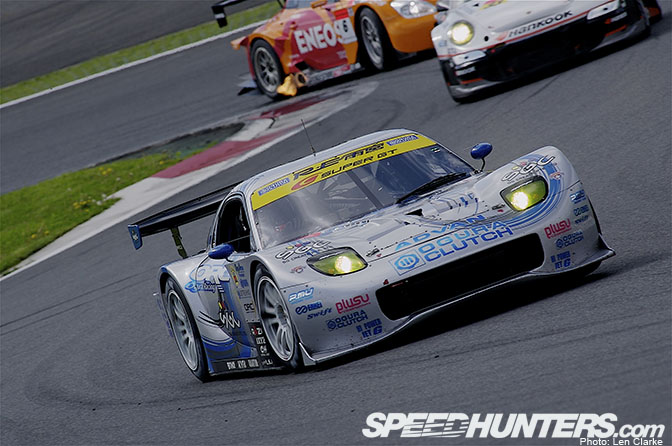
A return to form was well under way as 2008 dawned, the team taking pole position, fastest lap and victory in the season-opener at Suzuka. They finished the season in 7th place.
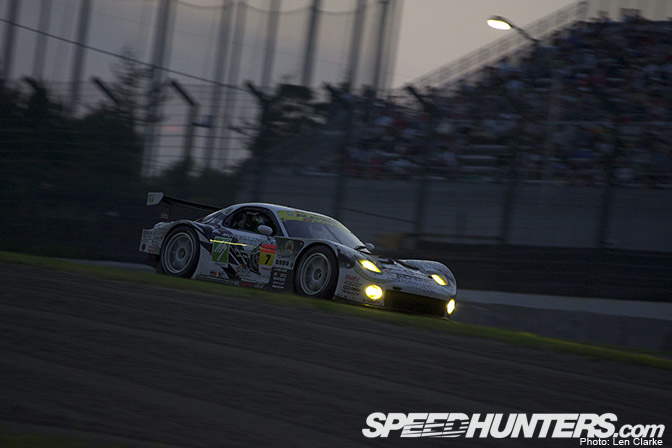
In 2009 Hiroyuki Iiri was replaced by former driver Nouteru Taniguchi, and a new title sponsor in Malaysia's M7 Mutara Motors. The Taniguchi/Orime pairing provided the team with its most consistent season ever, taking six podiums from nine rounds, including three 2nd-place finishes. The RE: Amemiya squad took 2nd in the title chase.
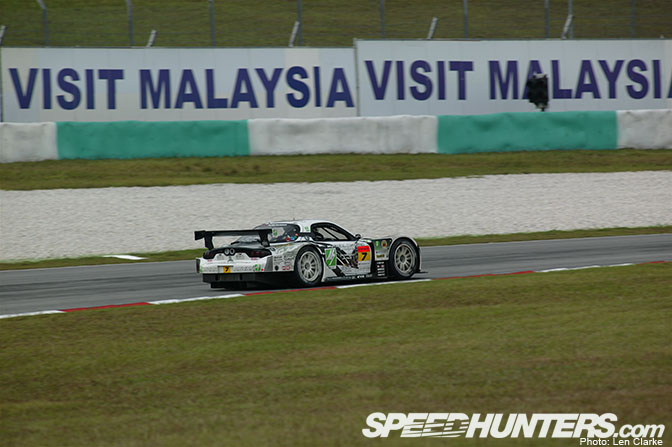
This past season was the third for the Taniguchi/Orime duo. They finished 3rd in the Driver's standings after wins at Suzuka and Sepang, topping off a truly remarkable 16-season career for the Mazda RX-7 in one of the most demanding series the world over.
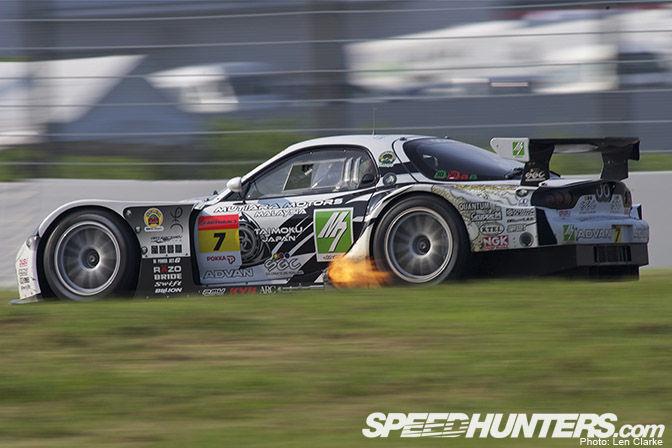
The success and longevity of the RE: Amemiya team in SUPER GT is proof positive that hard work can earn the ultimate glory. The team is one of the most consistent and well-respected in the GT300 class, no mean feat for a private outfit that acts and performs like a factory-backed squad every time they hit the track.
– Len Clarke
OFFICIAL SPEEDHUNTERS SUPPLIERS





thats my favorite super gt car!
awesome right up, great pics. i was curious tho, how many chassis did they go through over time?
(Isami Amemiya) <- So thats his full name
He is a rotary god. Love all his work from the porsche front ends to his 10 minute 20b tear down tutorial. I wonder if he still host's the cannon ball run
Cant help respect what this team has done to remain successful with a chassis of this age.
A true testament to Amemiya-san, the team, and of course the rx7.
Any chance of a spotlight on the car, and the team?
Maybe whats involved in prepping the car for races etc?
Major respect for the team, I love this car, one of the best race cars in the world IMO.
I second the spotlight request. Would love to know what exactly went into building a GT300 RX-7 and how exactly it differed from a standard road-going FD.
Enjoyed your post, as usual, Len. Keep bringing us the hardcore motorsports goods from Japan!
My favourite of the JGTC cars, and has been ever since I saw it. Fantastic.
Great read
This car has done a lot of great things. I haven't followed Super GT for that long at all to even begin to know everything about it. Sounds like an impressive record though. I wonder where it will go after this? Probably a show piece for the lobby of RE:Amemiya's shop?? I'm sure it'll be on a track again. Just gone from Super GT. I can't wait to see the new car!
M7 gave a big boost to Amemiya , great teamwork
A living legend.
OMG last shot it's celestial
Great write up and info! Thank you!
Nice work Len, I've always loved that car.
I remember watching it in Sepang when they were yellow and blue, and their car was particularly loud, and for some odd reason kept spinning at the hairpin.
Thats my favorite gt car as well. It's a shame that the Rx-7 is being replaced. But it's god news that they will keep the rotary engine =)
Nice to finally know the name of the man behind the mask.
I always liked this car.
I always liked this car.
RE-A.....We thank you
That is just wild to me knowing that a car a lot older than most of the cars in the series was winning. That great to see hard work pay off in the end.
16 years is the sign of a truely great team and car. I look forward to what they do in future
Thank God i got the Hyper REV RE racing book from RHDJapan when I was ordering engine parts for my 13B!!!
http://www.rhdjapan.com/re-amemiya-racing-book-51310
It shows the complete teardown of the car, stripped dow chassis, detailed write-ups. This is an epic car and truly sad to see it leave from GT300. The RX8 simply doesn't have the race gen like the RX7 chassis.
RE AMEMIYA was the one of the first tuners that made me fall in love with japanese cars as a kid....
I would love desktops of this car!
My favorite GT300 car by far. A true testament to the RX7 and Mr Amemiya.